
Discover the mouthwatering flavors of Assam’s traditional cuisine in this comprehensive how-to guide. Explore authentic Assam dishes and cooking techniques.
Assam’s traditional food is a mix of flavors and cooking methods passed down for generations. It shows the state’s rich culture and location. Each dish in Assam’s cuisine has its own story and importance.
Assam’s food is shaped by its location, culture, and history. It uses fresh ingredients and local flavors. From rice dishes to spicy fish curries, every dish shows Assam’s love for food and hospitality.
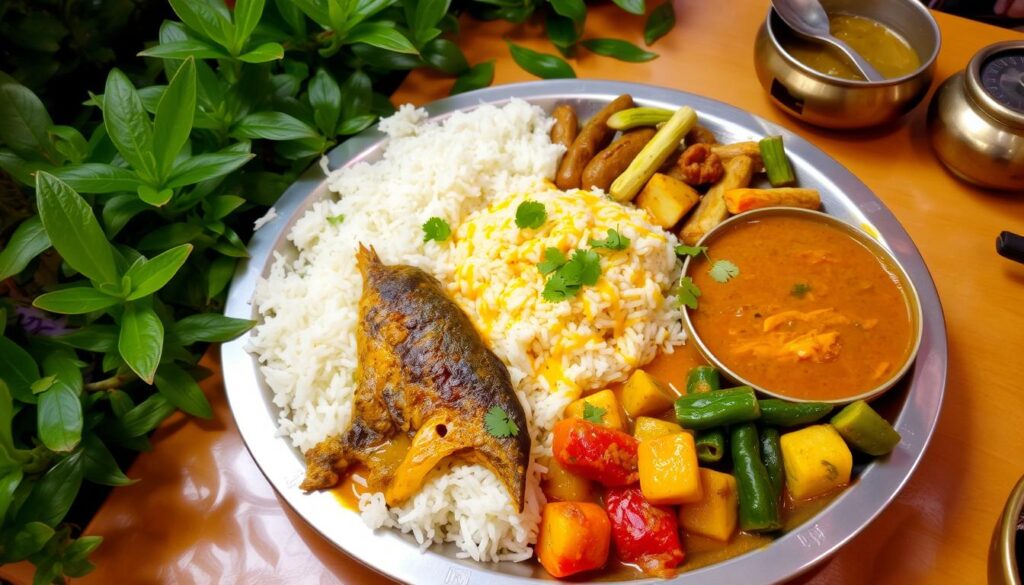
Discover the world of Assam’s traditional cuisine with this guide. It’s a journey of rich flavors, vibrant culture, and warm hospitality. Whether you love food, culture, or exploring new places, Assam has something for everyone.
Key Takeaways
- Assam traditional food is a unique blend of flavors, ingredients, and cooking methods.
- Authentic Assamese cuisine is a reflection of the state’s rich cultural heritage and geographical location.
- Assam culinary heritage is a treasure trove of delicious dishes, each with its own story and significance.
- Assam’s traditional cuisine is known for its use of fresh ingredients, simple cooking methods, and emphasis on local flavors.
- Assam’s traditional cuisine is a fusion of different influences, including geographical location, cultural traditions, and historical events.
- Assam culinary heritage is a must-visit destination for foodies, culture enthusiasts, and anyone who loves to explore new places.
Understanding the Rich Heritage of Assam Traditional Food
Assam’s traditional food shows off its rich culture. Popular dishes in assam have a unique taste. To get to know Assam’s food heritage, we need to look at its history, cultural importance, and geography. The regional cuisine of assam is influenced by history, geography, and culture.
The history of Assamese food goes back a long way. Traditional assamese recipes have been passed down for generations. Food is very important in Assamese life, seen in festivals, ceremonies, and daily meals. The area’s unique landscape and climate have shaped its cooking, with popular dishes in assam using local ingredients and spices.
Historical Origins of Assamese Cuisine
Assamese cuisine has a long history, influenced by many cultures. Its strategic location has made it a center for trade and cultural exchange. This is reflected in traditional assamese recipes, showing the diversity of its culture.
Cultural Significance in Assamese Society
Food is very important in Assamese society. The regional cuisine of assam is a big part of its culture. The unique cooking traditions in Assam show its rich heritage. Popular dishes in assam are key to its festivals, ceremonies, and everyday life.
Geographic Influences on Food Traditions
The area’s landscape and climate have shaped its cooking. Traditional assamese recipes often use local ingredients and spices. The regional cuisine of assam reflects the area’s diverse geography. Popular dishes in assam show the region’s special flavors.
| Dish | Ingredients | Significance |
|---|---|---|
| Jadoh | Rice, meat, spices | Traditional Assamese dish |
| Masor Tenga | Fish, sour ingredients, spices | Popular Assamese curry |
| Pitha | Rice, flour, sugar | Traditional Assamese sweet dish |
Essential Ingredients in Authentic Assamese Cooking
Assamese cuisine is famous for its flavorful dishes. These are made with local ingredients. The indigenous assam dishes show the region’s rich food history. Key ingredients include local herbs, spices, and more, giving flavorful assam cuisine its unique taste.
Fresh ingredients are key in Assamese cooking. The Brahmaputra River nearby offers plenty of fresh fish and seafood. The cuisine also uses various vegetables like eggplants, potatoes, and tomatoes. Spices and herbs like turmeric, coriander, and chili peppers add depth to the dishes.
- Rice, a staple in the region
- Mustard oil, used for cooking and adds flavor
- Local herbs like cilantro and mint, for freshness and flavor
- Spices like cumin and coriander, for depth and warmth
These ingredients, along with traditional cooking methods, make Assamese cuisine unique. Using indigenous assam dishes and local ingredients, it showcases the region’s rich culture. It offers a special dining experience.
Traditional Cooking Methods and Techniques
To truly appreciate Assamese cooking, you need to understand its traditional methods. These methods are key to keeping ingredients’ nutritional value high and flavors rich. The cooking practices in Assam’s regional cuisine are unique, setting it apart from others.
Steaming and fermentation are important techniques used in Assamese cooking. They help keep the natural flavors and textures of ingredients intact. The use of special tools like the jhaz and khara is also vital in this cooking tradition.
Steaming and Fermentation Practices
Steaming is a common method in Assamese recipes, often for fish and meat. Fermentation is used for dishes like jituk and akhoi. These practices make the ingredients more flavorful and enjoyable.
Unique Cooking Vessels and Tools
Unique cooking vessels and tools are essential in Assamese cooking. Made from natural materials like clay and wood, they can handle high temperatures. They ensure even heat distribution and help retain flavors, making dishes more delicious.
The use of local ingredients and cooking practices in Assamese recipes reflects the regional cuisine of Assam. This combination creates a unique and flavorful cuisine, different from others.
Staple Dishes in Assamese Daily Life
Assam’s traditional food is a big part of its culture and identity. The unique flavors and ingredients in Assamese cuisine come from the region’s geography and climate. These dishes are important in daily life, bringing people together and providing nourishment.
Popular dishes include masoor dal, fish curry, and red rice. These dishes are not just tasty but also carry cultural significance. For example, masoor dal is often served with red rice and fish curry. Together, they make a balanced and nutritious meal essential for daily life.
Here are some staple dishes in Assamese daily life:
- Masoor dal: a lentil dish made with red lentils and spices
- Fish curry: a spicy curry made with fish and a variety of spices
- Red rice: a type of rice that is rich in fiber and nutrients
- Jadoh: a rice dish made with rice, meat or fish, and spices
- Pitika: a dish made with mashed vegetables, fish, or meat, and spices
These dishes are key to Assam’s traditional food and are enjoyed during special occasions and festivals. The authentic Assamese cuisine shows the state’s rich cultural heritage and its people’s love for good food.
In conclusion, staple dishes are vital in Assamese daily life, providing nourishment and bringing people together. The authentic Assamese cuisine is a unique and flavorful reflection of the state’s culture and identity.
| Dish | Ingredients | Cultural Significance |
|---|---|---|
| Masoor dal | Red lentils, spices | Staple lentil dish, often served with red rice and fish curry |
| Fish curry | Fish, spices | Spicy curry made with fish and a variety of spices, often served with red rice |
| Red rice | Rice, fiber, nutrients | Type of rice that is rich in fiber and nutrients, often served with masoor dal and fish curry |
Mastering the Art of Assamese Fish Preparations
Assamese cuisine is famous for its flavorful dishes, with fish being a big part. The state’s rivers are full of fresh fish, making it perfect for cooking. To get good at making Assamese fish dishes, you need to know the traditional ways of cooking.
Using fresh ingredients and old cooking methods is key to making tasty Assamese fish dishes. Some favorites include fish curry, fried fish, and fermented fish. These dishes are not just tasty but also show off the state’s rich food history.
River Fish Delicacies
- Fish curry with mustard oil and spices
- Fried fish with herbs and chilies
- Grilled fish with a hint of lemon and garlic
Traditional Fish Curry Techniques
Fish curry is a big deal in Assam, and making it is an art. It’s cooked in mustard oil, which adds a special flavor. To make a traditional Assamese fish curry, you need spices like turmeric, cumin, and coriander.
| Dish | Ingredients | Cooking Method |
|---|---|---|
| Fish Curry | Fish, mustard oil, spices, herbs | Boiling and simmering |
| Fried Fish | Fish, herbs, chilies, oil | Frying |
| Grilled Fish | Fish, lemon, garlic, oil | Grilling |
Vegetarian Treasures of Assamese Cuisine
Assamese cuisine is full of tasty and healthy indigenous assam dishes for vegetarians. It uses local veggies, herbs, and spices to make dishes that are both unique and delicious.
Some popular vegetarian dishes in Assamese cuisine include:
- Alu Pitika, a flavorful potato dish made with local herbs and spices
- Massor Tenga, a sour and spicy curry made with lentils and vegetables
- Bhindi Masala, a rich and creamy okra dish made with a blend of spices
These dishes are not only tasty but also show the variety and richness of regional cuisine of assam. The use of local ingredients and traditional cooking methods makes these indigenous assam dishes truly special and worth trying.
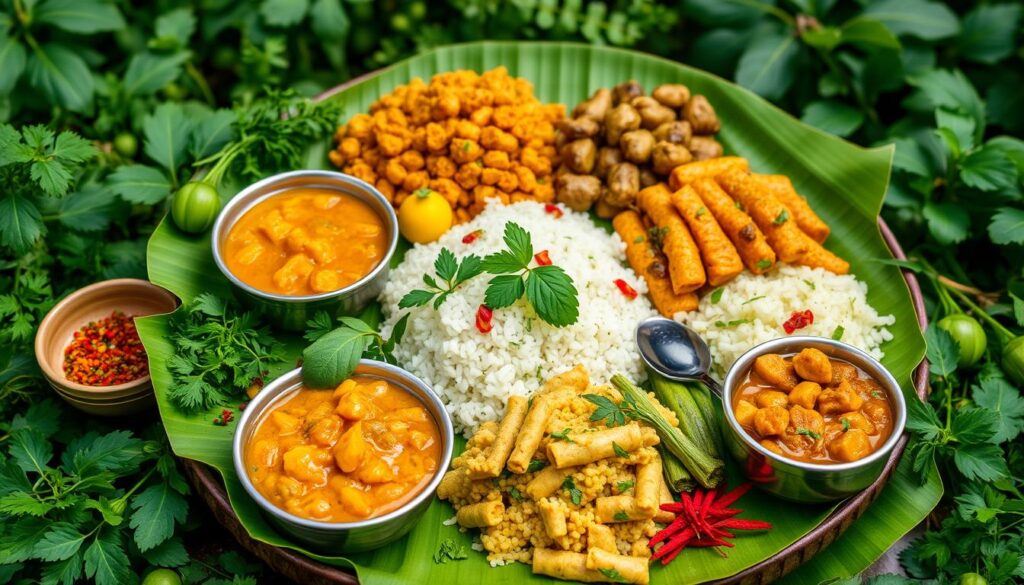
Whether you’re a vegetarian or just looking to try something new, Assamese cuisine has a lot to offer. With its unique blend of flavors and ingredients, it’s definitely worth exploring and discovering the many vegetarian treasures it has to offer.
The Role of Herbs and Spices in Assamese Cooking
Assamese cuisine is famous for its special mix of herbs and spices. These ingredients are key to making dishes taste great and smell wonderful. In authentic assamese cuisine, herbs and spices do more than just flavor food. They help keep food fresh and are good for our health. The assam culinary heritage is rich in local herbs and spices, carefully picked and mixed to make unique spice blends.
Using herbs and spices in Assamese cooking is an art that’s been passed down for generations. Indigenous herbs like basil, mint, and cilantro are often used in Assamese dishes. Spices like turmeric, cumin, and coriander add warmth and depth. These herbs and spices are also known for their health benefits, helping to treat different illnesses.
Medicinal Properties of Herbs and Spices
Herbs and spices in Assamese cooking have many health benefits. For instance, turmeric fights inflammation, and cumin helps with digestion. These ingredients are used not just for flavor but also to improve our health and well-being.
Signature Spice Blends
Assamese cuisine is known for its special spice blends. These blends are made with a mix of herbs and spices, like cumin, coriander, and turmeric. The use of these spice blends in assam culinary heritage shows the rich cultural heritage of the region.
| Herb/Spice | Medicinal Property | Use in Assamese Cuisine |
|---|---|---|
| Turmeric | Anti-inflammatory | Added to curries and stews |
| Cumin | Aids digestion | Used in spice blends and marinades |
| Cilantro | Antioxidant properties | Used as a garnish and in chutneys |
Traditional Assamese Sweets and Desserts
Assam’s traditional sweets and desserts are a key part of its flavorful assam cuisine. They offer a variety of unique and tasty treats. These sweets are loved in Assam and all over the country, enjoyed at special times.
Jolpaan, a crispy fried dough ball, and Narikol, a sweet coconut dessert, are favorites. They’re made with traditional assamese recipes passed down through generations. These sweets are a big part of weddings and festivals.
Here are some key ingredients used in traditional Assamese sweets:
- Rice flour
- Coconut
- Jaggery
- Milk
These ingredients are mixed in different ways to make a variety of sweets. Each one has its own special flavor and texture.
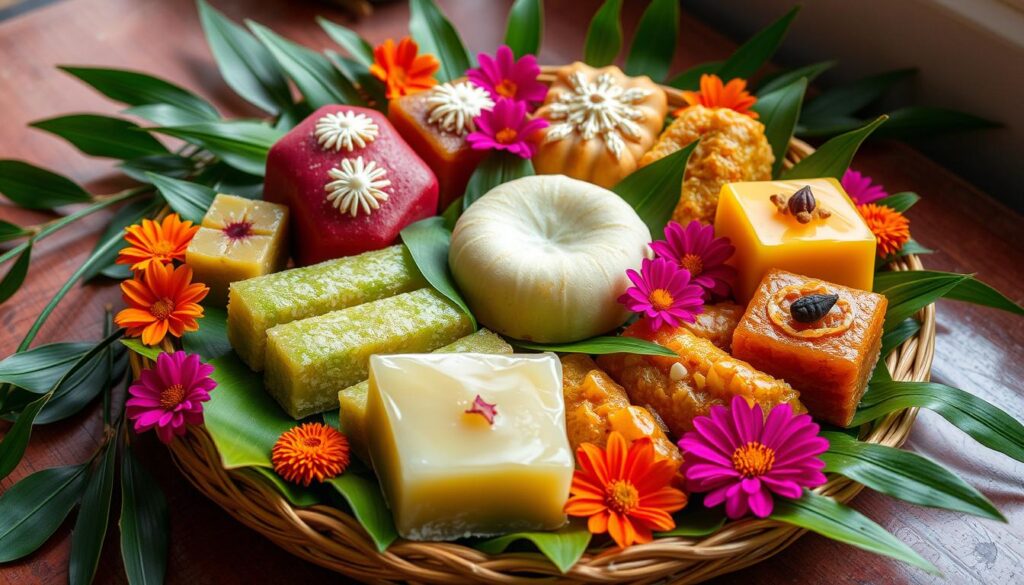
Traditional Assamese sweets are more than just food. They’re a big part of the state’s culture and social life. They’re served at ceremonies and celebrations. They’re also given as gifts to loved ones.
| Sweet | Ingredients | Occasion |
|---|---|---|
| Jolpaan | Rice flour, sugar, ghee | Weddings, festivals |
| Narikol | Coconut, jaggery, milk | Special occasions, celebrations |
In summary, traditional Assamese sweets and desserts are a delicious and important part of Assam’s flavorful assam cuisine. They’re definitely worth trying for anyone interested in Assam’s unique flavors and traditions.
Festive Foods and Ceremonial Dishes
Assam’s traditional food is key in its festive celebrations. Different dishes are made for various occasions. For example, during the Bihu festival, people enjoy pitika and masor tenga.
At wedding feasts, guests get to try many dishes. Jhalmuri and kosu xaak are favorites. These foods are not just tasty but also carry deep cultural meaning, bringing families closer.
Religious events in Assam also feature special foods. Prasad and bhog are offered to gods. These dishes are a big part of Assam’s spiritual traditions.
Bihu Festival Specialties
- Pitika: a traditional Assamese dish made from rice and mustard oil
- Masor tenga: a sour fish curry made with freshwater fish and citrus fruits
Wedding Feast Traditions
Traditional food is a big part of Assam’s weddings. Guests love dishes like jhalmuri and kosu xaak.
Religious Ceremony Foods
During religious events, special dishes like prasad and bhog are offered to gods. This shows how important food is in Assam’s spiritual life.
Modern Interpretations of Traditional Assamese Recipes
Authentic Assamese cuisine is changing with new takes on old recipes. Chefs mix in fresh ingredients and methods to make exciting dishes. They keep the heart of Assam’s traditional food alive.
Fusion cuisine is big, blending Assamese recipes with global tastes. For instance, masoor tenga (sour fish curry) gets a Japanese-Indian twist.
A list of modern Assamese dishes includes:
- Fusion fish curry with a blend of Indian and Japanese flavors
- Assamese-style sushi with traditional ingredients like jasmine rice and fermented fish
- Innovative desserts like black rice pudding with a touch of modern presentation
These new takes attract younger folks and keep traditional Assamese cuisine alive. Chefs use new ingredients and methods to craft unique, tasty dishes. These dishes highlight the richness of Assam’s indigenous food.
| Dish | Traditional Ingredients | Modern Twist |
|---|---|---|
| Masoor Tenga | Fish, sour curry, herbs | Fusion of Japanese and Indian flavors |
| Assamese Sushi | Jasmine rice, fermented fish | Modern presentation, innovative fillings |
Conclusion: Preserving and Celebrating Assam’s Culinary Heritage
Our journey through Assam’s culinary heritage shows its rich history and tradition. The assamese food culture is a mix of history, tradition, and love for the land. It shows Assam’s strength, ability to adapt, and dedication to its unique identity.
Keeping this culinary heritage alive is a big responsibility. It’s a call to action for those who love Assamese cuisine. By using traditional cooking methods and supporting local ingredients, we help keep these flavors alive for future generations.
Also, celebrating Assam’s culinary traditions helps the region grow culturally and economically. It empowers local communities and boosts pride and belonging. By highlighting the beauty of Assamese cuisine, we encourage both locals and food lovers worldwide to discover and enjoy its unique flavors.
FAQ
What are some of the most popular dishes in Assamese cuisine?
Popular dishes in Assamese cuisine include Khar, a traditional alkaline dish. There’s also Dail, made with lentils, and Masor Tenga, a sour fish curry. Pukhlein, a fermented fish dish, and Narotok, a spicy vegetable dish, are also favorites.
What are the key ingredients used in traditional Assamese cooking?
Mustard oil, bamboo shoots, and river fish are key in Assamese cooking. Seasonal vegetables and herbs like Tej Patta, Kalo Jeera, and Jolphai are also used.
How do the geographical and cultural factors influence Assamese cuisine?
Assam’s geography, with its rivers, forests, and plains, shapes its cuisine. The culture and religion of the Assamese people also influence dish preparation and consumption.
What are the traditional cooking methods used in Assamese cuisine?
Steaming, fermentation, and fire cooking are traditional methods in Assamese cuisine. Unique vessels like the Sil Batta and Beti are also important.
Can you tell me more about the role of herbs and spices in Assamese cooking?
Herbs and spices add unique flavors and health benefits to Assamese dishes. Noga Jolokia, Ramkhol, and Kalo Jeera are commonly used for their taste and health benefits.
What are some of the traditional Assamese sweets and desserts?
Traditional sweets include Pitha, Laru, Sunga Pitha, and Jolpan. These are rice-based delicacies enjoyed during celebrations.
How do Assamese people celebrate their culinary heritage during festivals and ceremonies?
Assamese cuisine is a big part of festivals like Bihu. Dishes like Pitha, Laru, and Jolpan are shared during celebrations. They also play a big role in weddings and religious ceremonies.
Can you provide some examples of how traditional Assamese recipes are being reinterpreted in modern times?
Modern chefs and home cooks are updating classic recipes. They might use new ingredients, cooking techniques, or presentation styles to appeal to today’s tastes.